
Trending
This story is from July 5, 2012
Of the streets where Manto walked
Of late, much has been said, and rather beautifully, about what is called the ‘undercity’— Suketu Mehta’s Maximum City and Katherine Boo’s Behind the Beautiful Forevers...
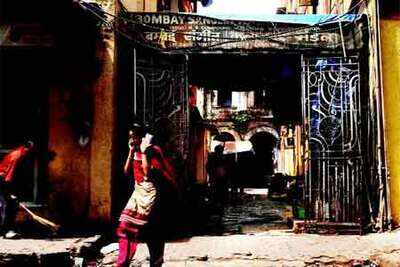
Of late, much has been said, and rather beautifully, about what is called the ‘undercity’— Suketu Mehta’s Maximum City and Katherine Boo’s Behind the Beautiful Forevers are among the books on the subject.
But over 60 years ago, before independence and when Byculla was still a posh suburb of the city, Urdu writer Saadat Hasan Manto lived out his fiction in the city’s seamy bylanes, and the undercity was his centrestage.
As we celebrate his centenary, veteran journalist and Bombay beat specialist Rafique
Baghdadi helps us trace Manto’s mental map of the city. He lived here for over eight years, leaving it once in 1941 to go to Delhi for four years and then, finally, after partition. Manto was born in 1912 in Sambrala, Punjab, India. He died, at the age of 43, in Lahore, Pakistan. And he lived his imaginative life in the middle of these two partitioned states and wrote about the separation with great poignancy.
While Manto did not himself spell out his disappointment at having to leave India, his wife Safia wrote about it in a letter to his biographer, translator
Grant Road
In his stories about pimps, sex workers and neighbours, most written after he left Mumbai, Manto doesn’t give us much except the absolutely essential details of the locale. But Baghdadi tells us he spent many inspired hours in the neighbourhood around Kennedy Bridge, which he calls Pawan Bridge (for the breeze) and which once overlooked the windows of courtesans’ quarters. We scour the locations for the scraps we can find.
The trail starts at Grant Road Station East, standing outside which it is easy to travel back to the 1930s and 40s. We walk through the labyrinthine neighbourhood and through a tunnel, wondering which cobblestones Manto stepped on and what he saw around him.
We come to the neighbourhood that was recently in the news when the Queen Mary School complained it was living in constant fear of sex pests. The 137-yearold school, which boasts of alumni such as Nargis Dutt, Shabana Azmi and Shobhaa De, is located near the ‘red light area’. Manto’s story Three Simple Statements plays out in a public urinal next to Congress House and Jinnah Hall in this area. We come to this landmark but don’t spot a urinal. Fortunately for fiction writers, the geography of the mind need not correspond to the confines of the real world.
Kennedy Bridge
We take the stairway up to the Kennedy Bridge, on one side of which is Jyoti Studio, which belonged to Ardeshir Irani. Manto, who wrote the script for the first indigenously made colour film Kisan Kanya, came here for work. Manto, who wrote about nine films, also worked with Bombay Talkies, Malad, and Filmistan, Goregaon. At both places he was a friend of actor Ashok Kumar, who he portrayed in a sketch later. In fact, in Eight Days, starring Ashok Kumar, he played an Air Force officer. Of the movies he wrote, Mirza Ghalib, written in 1948 but filmed after he had left for Pakistan, is perhaps the most famous. His most acclaimed short story Toba Tek Singh was also turned into a film. We end our walk in the area with Lamington Road.
Foras Road
At Lamington Road, we take a cab and drive through Falkland Road. Baghdadi points out a sign prohibiting ‘immoral activities’ outside a ‘wadi’ from Manto’s era while on this street. We come to Foras Road, where the writer set stories such as The Man Who Liked to Lose, bringing to life the impelling tales of sex workers. His uninhibited writing brought him many charges of obscenity.
In A Question of Honour, he describes the area full of cafes, restaurants and cinemas. He describes Sufaid Gully, located off the street, as the place where ‘prostitutes of every race and description can be found’.
One of his short works Siraj, about a pimp and a sex worker, is set near the Nagpada police station, a neighbourhood that was also known for its multicultural ambience. We eat at old Sarvi restaurant at the junction, from where we presume a Manto character orders kebabs.
Arab Gully
It was on this street — off the junction of Grant Road and Lamington Road — now called Maulana Shaukat Ali Road, that Manto once rented a room. In Perin, the narrator says, “I was in Bombay and living in what I can call utter poverty. At night I slept in a kholi, a tiny room, for which I was charged nine rupees every month. It had neither water nor electricity and it was abominably filthy. At night, every variety of bug fell from the ceiling on to my body and there was no shortage of rats…” He evokes this street in The Question of Honour: ‘with twenty to twenty-five Arabs living there, all apparently in the pearl trade’. This street, which has a dead end and houses a mosque, is now surrounded by high-rises, heightening the feeling that much time has passed since Manto lived.
Clare Road
Our pilgrimage ends on Clare Road in Byculla where he lived and married in his later years in Mumbai. We go into what used to be Adelphi Hotel and is now the Ismailia Co-Operative Housing Society. He lived on the second floor of one of any in a cluster of buildings. But who knows. Certainly not any of the residents, who direct us from one part to the other, most utterly unaware of a man called Saadat Hasan Manto.
Saloni.Meghani @timesgroup.com
But over 60 years ago, before independence and when Byculla was still a posh suburb of the city, Urdu writer Saadat Hasan Manto lived out his fiction in the city’s seamy bylanes, and the undercity was his centrestage.
As we celebrate his centenary, veteran journalist and Bombay beat specialist Rafique
Baghdadi helps us trace Manto’s mental map of the city. He lived here for over eight years, leaving it once in 1941 to go to Delhi for four years and then, finally, after partition. Manto was born in 1912 in Sambrala, Punjab, India. He died, at the age of 43, in Lahore, Pakistan. And he lived his imaginative life in the middle of these two partitioned states and wrote about the separation with great poignancy.
In Pakistan, in the latter years of his short life, he wrote rather emotionally about his love for Mumbai. “Four and a half years ago, when I said goodbye to my second home, Bombay…I was sad at leaving a place where I had spent so many days of a hard working life. That piece of land had offered shelter to a family reject…”
While Manto did not himself spell out his disappointment at having to leave India, his wife Safia wrote about it in a letter to his biographer, translator
Khalid Hasan says. She said he started drinking heavily when he was living alone in Mumbai, and then, later, when he ran out of work, drank himself to ill-health.
Grant Road
In his stories about pimps, sex workers and neighbours, most written after he left Mumbai, Manto doesn’t give us much except the absolutely essential details of the locale. But Baghdadi tells us he spent many inspired hours in the neighbourhood around Kennedy Bridge, which he calls Pawan Bridge (for the breeze) and which once overlooked the windows of courtesans’ quarters. We scour the locations for the scraps we can find.
The trail starts at Grant Road Station East, standing outside which it is easy to travel back to the 1930s and 40s. We walk through the labyrinthine neighbourhood and through a tunnel, wondering which cobblestones Manto stepped on and what he saw around him.
We come to the neighbourhood that was recently in the news when the Queen Mary School complained it was living in constant fear of sex pests. The 137-yearold school, which boasts of alumni such as Nargis Dutt, Shabana Azmi and Shobhaa De, is located near the ‘red light area’. Manto’s story Three Simple Statements plays out in a public urinal next to Congress House and Jinnah Hall in this area. We come to this landmark but don’t spot a urinal. Fortunately for fiction writers, the geography of the mind need not correspond to the confines of the real world.
Kennedy Bridge
We take the stairway up to the Kennedy Bridge, on one side of which is Jyoti Studio, which belonged to Ardeshir Irani. Manto, who wrote the script for the first indigenously made colour film Kisan Kanya, came here for work. Manto, who wrote about nine films, also worked with Bombay Talkies, Malad, and Filmistan, Goregaon. At both places he was a friend of actor Ashok Kumar, who he portrayed in a sketch later. In fact, in Eight Days, starring Ashok Kumar, he played an Air Force officer. Of the movies he wrote, Mirza Ghalib, written in 1948 but filmed after he had left for Pakistan, is perhaps the most famous. His most acclaimed short story Toba Tek Singh was also turned into a film. We end our walk in the area with Lamington Road.
Foras Road
At Lamington Road, we take a cab and drive through Falkland Road. Baghdadi points out a sign prohibiting ‘immoral activities’ outside a ‘wadi’ from Manto’s era while on this street. We come to Foras Road, where the writer set stories such as The Man Who Liked to Lose, bringing to life the impelling tales of sex workers. His uninhibited writing brought him many charges of obscenity.
In A Question of Honour, he describes the area full of cafes, restaurants and cinemas. He describes Sufaid Gully, located off the street, as the place where ‘prostitutes of every race and description can be found’.
One of his short works Siraj, about a pimp and a sex worker, is set near the Nagpada police station, a neighbourhood that was also known for its multicultural ambience. We eat at old Sarvi restaurant at the junction, from where we presume a Manto character orders kebabs.
Arab Gully
It was on this street — off the junction of Grant Road and Lamington Road — now called Maulana Shaukat Ali Road, that Manto once rented a room. In Perin, the narrator says, “I was in Bombay and living in what I can call utter poverty. At night I slept in a kholi, a tiny room, for which I was charged nine rupees every month. It had neither water nor electricity and it was abominably filthy. At night, every variety of bug fell from the ceiling on to my body and there was no shortage of rats…” He evokes this street in The Question of Honour: ‘with twenty to twenty-five Arabs living there, all apparently in the pearl trade’. This street, which has a dead end and houses a mosque, is now surrounded by high-rises, heightening the feeling that much time has passed since Manto lived.
Clare Road
Our pilgrimage ends on Clare Road in Byculla where he lived and married in his later years in Mumbai. We go into what used to be Adelphi Hotel and is now the Ismailia Co-Operative Housing Society. He lived on the second floor of one of any in a cluster of buildings. But who knows. Certainly not any of the residents, who direct us from one part to the other, most utterly unaware of a man called Saadat Hasan Manto.
Saloni.Meghani @timesgroup.com
End of Article
FOLLOW US ON SOCIAL MEDIA








Photostories
lifestyle videos

Featured In Lifestyle
Popular Categories
Entertainment NewsBollywood NewsTollywood NewsKollywood NewsMollywood NewsMovie ReviewsLatest Hindi MoviesLatest Tamil MoviesMX PlayerParenting TipsHome RemediesWeight LossBeauty TipsParenting TipsHindi VideosHindi Video SongsBhojpuri Music VideosLatest Telugu MoviesBhojpuri Music VideoHindi TV News
Trending in Entertainment
Latest MoviesBollywood MoviesHollywood MoviesTamil Movies 2024Telugu Movies 2024Malayalam Movies 2024Kannada Movies 2024Marathi Movies 2024Bengali Movies 2024Top Rated Movies 2024Best Hindi MoviesBest English MoviesBest Telugu MoviesBest Tamil MoviesBest Malayalam MoviesBest Kannada MoviesBest Bengali MoviesUpcoming Hindi MoviesBest Movies Of All TimeBest Hindi Movies of All Time
Trending in Etimes
PM Modi’s birthday through the years: From slicing 73-kg laddoo cake to Cheetah Project and Vishwakarma YojanaHoroscope TodayNumerology Predictions TodayElla EmhoffDonald Trump AssassinationKaren DunnJose LopezKristina JoksimovicJoe WilsonTrump Eating The Dogs SongGermany NewsKamala HarrisPrince HarryBelly Fat LossDiabetes RiskFull Moon in September 2024Relationship TipsSean DiddyMiley CyrusDave Bautista
Trending in TV
Trending in Lifestyle
Trending in Regional
Movie Reviews
Berlin ReviewThe Buckingham Murders ReviewSpeak No Evil ReviewVisfot ReviewThalapathy Is The G.O.A.T ReviewRebel Ridge ReviewDetective Conan vs. Kid the Phantom Thief ReviewBeetlejuice Beetlejuice ReviewPad Gaye Pange ReviewA Wedding Story ReviewThe Diary Of West Bengal ReviewTikdam ReviewKinds Of Kindness ReviewAfraid Review
Upcoming Hindi Movies
Latest News
Pankaj Kapur is proud of son Shahid Kapoor’s film choices, calls him ‘the finest actor in the country’Mukhtar Ansari died of heart attack, not poisoning: UP's Banda district magistrate's report4 types of tea to improve gut health and ease digestive issuesMemeFi daily codes for 17 September 2024: Boost your earnings with daily codes and know how to maximizeKhatron Ke Khiladi 14: Shalin Bhanot hosts a fun party for his co-contestants Krishna Shroff, Abhishek Kumar, KaranVeer Mehra and othersDecoding how log analytics systems are enabling brands to derive maximum value from dataKitchen Tips: How to elevate home cooking to Michelin levelAnother Mpox suspected case in India: Man showing symptoms admitted to hospitalTaurus, Daily Horoscope Today, September 17, 2024: Anxiety and stress diminishLiza Colon becomes 1st Latina to win Best Supporting Emmy AwardSelena Gomez recreates practiced applause she learnt from TV show Friends after losing at Emmys 2024Former WWE superstar is no longer listed on their internal rostersBeyond Paychecks: Job satisfaction, work-life balance more important than salary for Gen Z workforce‘You is sleep or you can sleep’: Students prank Benglauru’s ‘pookie professor’ in viral videoHow ‘Oxford returnee’ Atishi became chief minister of DelhiWhy more couples aged 50 or older are getting divorcedThese are the most toxic fresh produce of 2024Congress condemns Shiv Sena MLA's 'Rs 11 lakh reward to cut Rahul Gandhi's tongue' remark
Copyright © 2024 Bennett, Coleman & Co. Ltd. All rights reserved. For reprint rights: Times Syndication Service